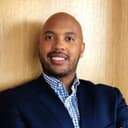
From Academic Dismissal to Academic Scholarship: Satyam’s Medical School Journey

Imagine working for years to earn a seat in medical school — rebuilding your GPA, retaking the MCAT multiple times, and reapplying after facing rejection — only to finally be accepted and then told, after just one semester, that the institution no longer believes you can successfully continue. Not because you stopped trying. Not because you didn’t care. But because your exam averages fell just short of passing.
That was the reality Satyam Vaidya faced when he was academically dismissed from medical school just three months after his white coat ceremony.
Academic dismissal ends many medical careers before they begin. For Satyam, it became the moment he chose to prove he could still become the physician he had always dreamed of being.
A Path Influenced by Family — and Forged Through Personal Struggle
Satyam Vaidya grew up in New Jersey as an only child in an immigrant household that quietly carried high expectations. His family came to the U.S. from India, and from the outside, his path to medicine looked almost predetermined. His paternal grandfather had been a village doctor — a man known not just for treating illness, but for being a trusted presence in his community.“Everyone in the community calls him મોટા ભાઈ (Mōṭā Bhāī) — which means older brother — not just because he’s older and helped raise all his siblings, but because caring for others has always been his vibe.”Yet despite that early influence, Satyam didn’t truly internalize the desire to pursue medicine until college.
At Rutgers University, where he studied Cell Biology and Neuroscience, Satyam quietly struggled — not just academically, but mentally. Large lecture halls, limited access to faculty, and ineffective study habits left him feeling isolated. When things didn’t click, he assumed the problem was him. At his lowest point, he faced serious mental health challenges, including depression.“In my darkest moments, I fundamentally thought how a small bit of kindness or help could really make a big impact. How being a physician could let me be that positive force on people’s lives because I just truly wanted to be in service to all people — for women, people of color, queer individuals, everyone. Not for a reward, but because I could be the doctor that could create safe spaces for all, because I’m confident that having more diverse minds in medicine will lead to better healthcare.”
That realization — combined with a commitment to advocacy for marginalized communities in healthcare — became the foundation of his motivation to become a physician.
From Acceptance to DismissalAfter graduating with his bachelor’s degree in 2019, Satyam enrolled in a Master of Biomedical Sciences program at Rutgers to strengthen his academic foundation. This time, things were different. With improved support, better study strategies, and accountability, he proved to himself that he could succeed — earning mostly A’s and B’s and rebuilding confidence in his abilities.
But the road forward was still challenging.
Satyam entered medical school in the fall of 2024 after a long, non-linear path shaped by undergraduate struggles, a master’s program, three MCAT attempts, and years of proving to himself that he belonged. Despite that growth, the transition into the intensity of medical school coursework proved difficult.
He quickly found himself overwhelmed by the pace and volume. Satyam spent countless hours creating resources from scratch — rewriting notes, making Anki cards, and preparing to study — but not enough time actively testing his understanding. He was balancing Anatomy, Molecular Medicine, Osteopathic Principles and Practice, and Primary Clinical Skills, all while trying to relearn how to study after years away from school.
While some strategies, such as group studying, provided short-term improvement, they ultimately proved inefficient and further strained his time management. At the same time, Satyam was navigating worsening mental health. Moving from New Jersey to Alabama, combined with academic pressure and isolation, pushed him into a deep depression that began to affect his ability to be fully present as a medical student.
His exam scores reflected that struggle. Satyam was scoring in the 50s to low 70s, often falling just short of passing thresholds. When he was flagged as at risk for academic dismissal, he did everything possible to recover — meeting with professors and committing every available hour to studying, including staying in Alabama over Thanksgiving break to prepare for finals.
Despite steady improvement, the outcome was his worst fear.
Satyam narrowly failed three core courses and faced academic dismissal.
In his academic hearing, Satyam openly acknowledged that untreated mental health challenges and time management issues were at the root of his academic struggles — and that he was already proactively addressing both through mental health treatment and refined study methods. He vulnerably pleaded for the opportunity to repeat the semester. One course director — whose class he had failed — explicitly expressed their belief that Satyam could succeed if given another chance.
Still, the academic dismissal stood.Choosing to Keep GoingAfter dismissal, Satyam had every reason to walk away.But he didn’t. Instead, Satyam chose to take the risk and put himself out there one more time."I was still very determined for my goals of becoming a physician. So, I was like, I will just reapply to medical school."Determined to continue pursuing medicine, he applied to the American University of the Caribbean (AUC), which offered him acceptance contingent upon completing their Medical Education Readiness program (MERP) — a 15-week medical school preparatory program where students must complete four courses: Medical Anatomy/ Histology, Medical Biochemistry/Molecular Biology, Medical Microbiology/Immunology and Medical Physiology/Biophysics. These courses are intended to provide similar content and depth to those taught in the medical school curriculum.Initially frustrated by the contingent acceptance, Satyam soon realized it was exactly what he needed.Learning How to Learn — Differently
From the first weeks of MERP, Satyam made a conscious decision to study differently.
“Reflecting on my first semester in Alabama, I knew that I had a problem with my time management, but I also realized my big thing was that I didn’t do enough practice problems.”He stopped trying to build everything from scratch. Instead, he shifted toward active learning and practice-based review — identifying what he knew, what he didn’t, and fixing gaps immediately.This was when he began using StudyFetch, especially Quiz Fetch, to restructure his study time.“I had a quiz every week in MERP, so I would use StudyFetch to study for my quizzes and to keep on top of the material. And that’s when I consistently started performing very well.”Rather than passively reviewing notes, he generated targeted USMLE style questions and practiced daily. What made the difference wasn’t just the quantity of questions — it was the process:
- Using QuizFetch practice questions throughout the week to reinforce learning
- Saving time by using StudyFetch–generated spaced-repetition flashcards instead of manually creating Anki cards
- Leveraging Spark.E chat AI-powered explanations to clarify misunderstandings immediately
- Identifying weak areas early instead of discovering them on exam day
StudyFetch didn’t replace his effort — it focused it, and for the first time, he wasn’t guessing whether he understood the material. He knew.His performance reflected that shift. Across the MERP program, Satyam consistently earned scores in the high 70s to high 80s, finishing well above the required passing thresholds.As that consistency took hold, it began to show not only in his grades, but in how he showed up academically. Satyam came to class and office hours prepared, asking thoughtful, specific questions and demonstrating a clear command of the material. Over time, his professors began to see both his academic growth and the discipline behind it.By the end of the program, he accomplished more than his goal of gaining acceptance into Medical School. Satyam earned a $15,000 academic scholarship and was asked by his MERP anatomy professor to return and speak with future students, believing his journey and approach to learning would be impactful for those just beginning their own medical training.
The same student once dismissed for failing three core medical school courses — including anatomy — was now being recognized for his academic performance and asked to mentor others.The StudyFetch DifferenceLooking back, Satyam doesn’t frame StudyFetch as something that replaced learning — but as a tool that helped him finally study in a way that matched the realities of medical school."StudyFetch was a great way for me to gain more practice and good study time so that I was able to use my time more effectively."It not only helped with his time management and retention but also was key in rebuilding his confidence. For the first time, he walked into exams knowing where he stood — not hoping, but confident.“I can’t emphasize enough how much my exam confidence improved after incorporating StudyFetch. I just felt so prepared for every quiz and every exam that I was still doing things for myself like going to the gym and playing video games. Which was a huge change from
when I was in Alabama, and I would quit any form of self-care the week of exams.”Today, Satyam continues to use StudyFetch as an integral part of his medical school routine.“It’s one of the big tools in my ‘study tool-box’, that helps me keep working knowledge of all my material and helps optimize my time.”He uses the note generator with image extraction to quickly build structured study guides which he then annotates as he reviews, then reinforces that material through QuizFetch practice questions and spaced-repetition flashcards. When he encounters difficult concepts, he uses Spark.E as a tutor — asking it to walk through topics step by step and help him think through how to approach unfamiliar material. This integrated approach has made his studying far more efficient, allowing him to spend less time organizing resources and figuring out how to study, and more time actively learning.Satyam’s Advice to Medical Students Facing Academic Struggles“This industry unfortunately will grind you up, spit you out, and will act like they don't care about you. But you have to find your own self-worth in this arduous process. If you are in it for the right reasons and you have a passion for this, you are going to be good enough! Remember, there's so many different pathways to get you to the place you want to be at. Don't let someone tell you you're not good enough, because there's always room for improvement. Also don't underestimate the power of community. I don't know where I would be if it wasn't for my very supportive friends and family. Everyone was so kind and supportive of me moving on and moving forward. It meant the world to me. Trust me, having a good community around you will help you in a lot more ways than you think. When it comes to studying, don’t just stubbornly stick to the same techniques if they aren’t working. Try new things and do what you can to best optimize your time so you can get as much good studying in. Also take breaks, because you don’t want to burn yourself out!”What His Story Reminds Us Of
In medical education, we often ask students to prove they belong again and again.Satyam did. And when he was finally given the right opportunity — and the right approach — he didn’t just survive.
He rose.
At StudyFetch, we believe stories like Satyam’s matter. Not because they are rare, but because they reveal what becomes possible when students are given the right tools, support, and opportunity to learn in ways that work for them. Academic setbacks do not define potential — access and approach do.